



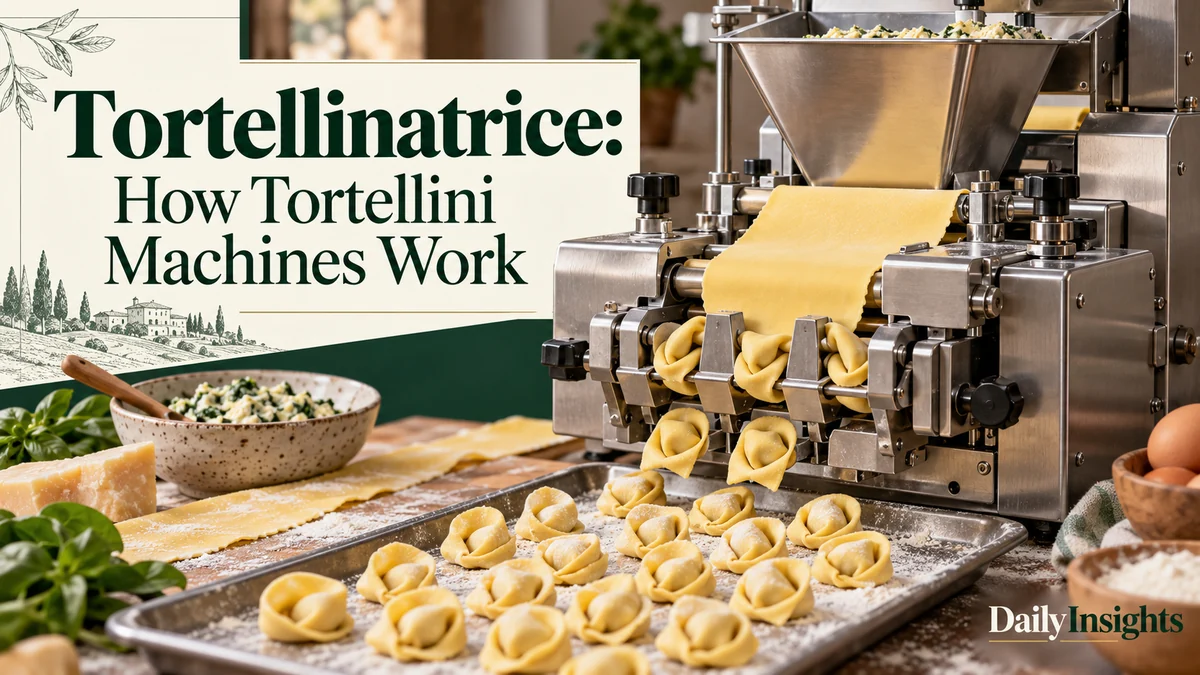
A tortellinatrice is a machine used to form tortellini, the folded, filled pasta associated with Italian cooking. The Italian term describes a category of equipment rather than one brand. Commercial models bring together dough-sheet handling, filling delivery and mechanical forming; their scale and capabilities depend on the specific machine.
For a restaurant, fresh-pasta workshop or food manufacturer, the main question is whether a model can consistently make the intended pasta with the business's own dough and filling. A headline output figure is useful, but it does not replace a production trial, a cleaning assessment or a realistic calculation of how the machine fits the rest of the operation.
What does tortellinatrice mean?
In equipment catalogues, tortellinatrice means a tortellini-making or tortellini-forming machine. The plural is tortellinatrici. Suppliers use the term for different models, including compact commercial equipment and machines designed for industrial lines. Searching the Italian name can therefore reveal a much wider range than searching for a domestic pasta maker.
The distinction from a roller or extruder is important. A roller prepares a sheet, while an extruder pushes dough through a die to create a shape. A tortellini former has to bring dough and filling together and close the pasta. It may receive a prepared sheet from another machine rather than mixing and rolling dough from flour.
| Assessment | What to establish |
|---|---|
| Product | Recipe, shape and piece weight |
| Capacity | Output for that format and recipe |
| Cleaning | Demonstrated procedure and changeover time |
| Installation | Utilities, space and upstream equipment |
| Support | Training, spares and service responsibility |
How the forming process works
GEA's description of its FreshPasta Former 1 T540 gives a clear example of the process. The machine receives a dough sheet, reduces it to the required thickness, cuts the sheet and doses filling for each piece. Rollers and forks then close the product into its intended form. A separate arrangement handles the remaining sheet scraps.
That sequence explains why the upstream sheet matters. If dough arrives inconsistently, the former must work with an unstable input. Likewise, filling delivery and forming must stay coordinated. A machine that works well with a smooth test filling may behave differently when a business uses a coarser recipe. The sensible purchasing question is whether the supplier will test the actual proposed recipe.
The machinery is not a substitute for recipe development. Dough handling, filling consistency and the desired finished shape need to be considered together. Treat the supplier's demonstration as a starting point, then examine a representative batch after handling and cooking. Attractive uncooked samples alone cannot show how the product will perform on a plate.
Small workshop and industrial examples
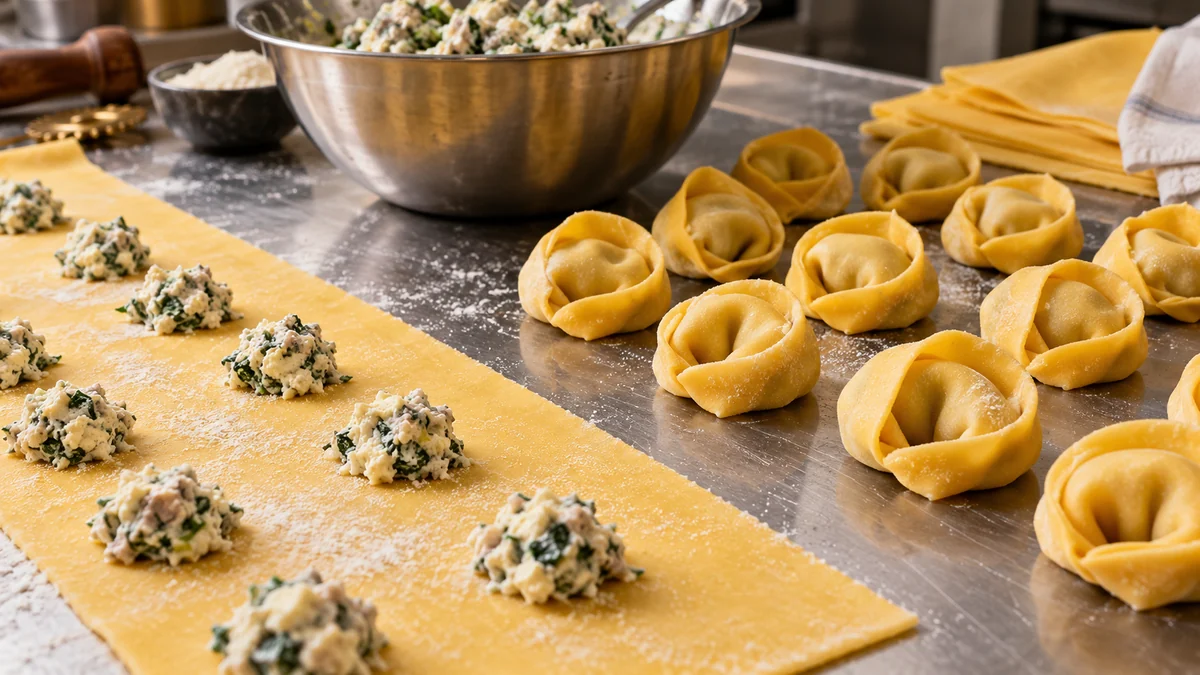
Vento Impianti describes its T2B and T3B as machines for classic Bologna-style tortellini with meat filling, aimed at smaller fresh-pasta production. Its catalogue identifies adjustable laminating rollers, a continuous filling feeder and an automatic forming unit. The T2B is listed at 26–30 kg per hour for the specified 2.6 g format, while the T3B has a different stated output and piece size.
At a larger scale, Tecna Saima publishes industrial tortellinatrice models with different sheet widths and nominal production figures. Its table identifies, for example, a T9C at 150–200 kg per hour with a 540 mm sheet. These are manufacturer specifications for particular configurations, not a promise that every recipe or working day will deliver the same output.
The examples show why a single universal capacity range is unhelpful. A smaller machine making a particular piece size and a larger machine making another format are not directly comparable simply because both make tortellini. Record the model, format, sheet width and conditions beside any quoted production number.
Which specifications deserve attention?
Begin with the finished product: shape, weight, dough-to-filling balance and acceptable variation. Then ask which tooling and configuration produce that result. OMAR's 540 Standard catalogue distinguishes versions for mini tortellini, medium tortellini and larger tortelloni. That is a useful reminder that changing size can involve a different configuration rather than an unrestricted adjustment.
Sheet width affects how the former integrates with the upstream equipment. Electrical requirements, dimensions, access space and installation conditions also need written confirmation for the quoted model. A machine that fits a floor plan still needs room for loading, servicing and removing food-contact components. Plan those movements before ordering.
Controls and adjustment arrangements matter to the operator. Ask a demonstrator to explain how thickness, filling delivery and forming speed are set, and which adjustments can safely be made during operation. The answer should come from the relevant manual and training, not from assumptions based on a similar-looking machine.
Cleaning and changeovers
Food-contact access should be part of the buying decision. GEA describes features intended to help washing, including an extractable scrap-cutter carriage. Vento identifies a filling feeder that can be dismantled for cleaning. Those details are useful, but they do not mean every component of every tortellinatrice can be washed in the same way.
Ask to see a complete changeover from one recipe to another, including disassembly, cleaning, inspection and reassembly. Record the staff time and any tools required. For a business switching between fillings, that practical demonstration may be more relevant than a short video of the machine running at full speed.
The manufacturer should provide the cleaning procedure for the specific model. Follow the site's own food-safety arrangements as well, including how ingredients and allergens are managed. Do not infer an approved cleaning method merely because external panels are stainless steel. Motors, controls and enclosed mechanisms may have different requirements.
Understanding the real cost
There is no single reliable price for a tortellinatrice. A quote can depend on model, configuration, condition, tooling and installation. A used machine advertised online is not a dependable guide to the price of a new, commissioned installation. Obtain a dated quotation setting out exactly what is included.
Compare the complete working arrangement: delivery, commissioning, training, tooling, service support and likely spare parts. Also identify whether a mixer, sheeter, conveyor or other equipment is needed. The former's purchase price is only one part of establishing a workable production process.
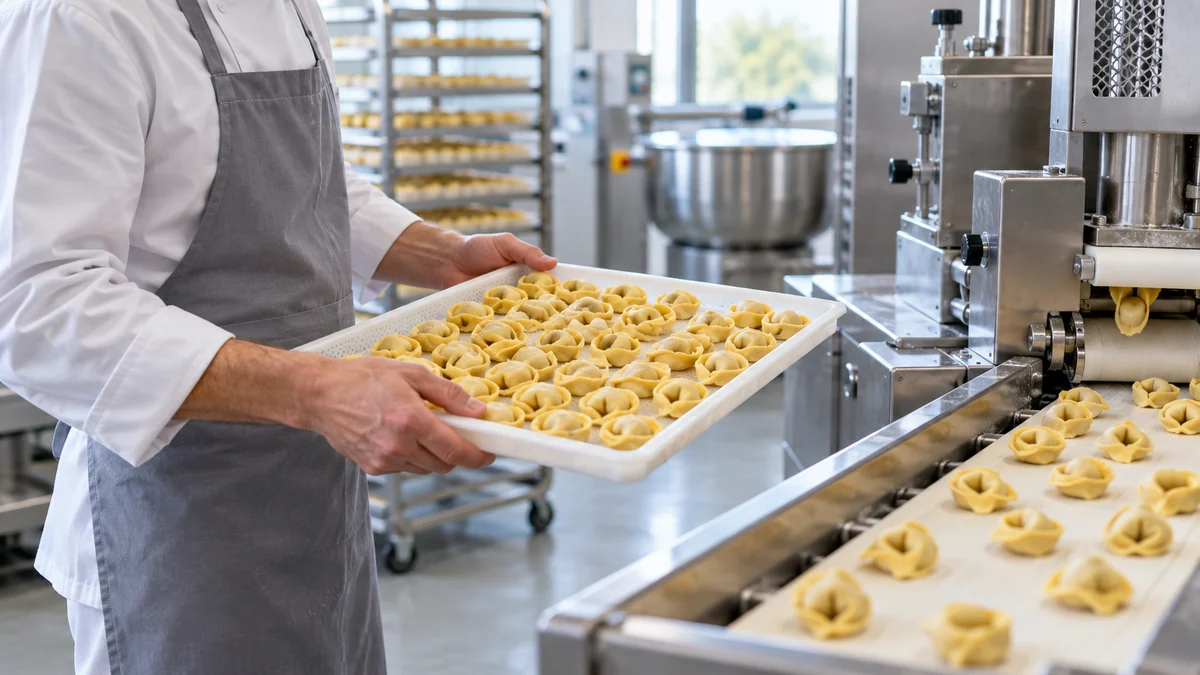
A useful business calculation starts with saleable output rather than maximum mechanical output. Include setup, cleaning, recipe changes and rejected pieces in the trial record. Avoid assuming that every kilogram formed will become a kilogram sold. Demand, storage arrangements and the rest of the production process determine how much capacity the business can actually use.
Buying a used machine
For used equipment, ask for the model identification, serial number, service history and a clear account of refurbishment. Confirm which tools, guards and manuals are supplied. An attractive exterior does not establish the condition of the forming mechanism, filling system or control equipment.
Request a working demonstration and, where practical, an inspection by someone familiar with that model. Ask who can supply replacement parts and support locally. A lower purchase price can become poor value if an essential component cannot be obtained or if the machine cannot run the required format.
A practical demonstration checklist
Take the intended dough and filling to the trial, agree the target product, and measure a sustained run rather than a few successful cycles. Examine consistency, closure, handling and cooked results. Then watch the shutdown and cleaning process. Keep the written specification and trial findings together so that the final order reflects what was demonstrated.
The best tortellinatrice is the model that fits the product and the operation. Larger capacity is valuable only when demand, staffing and supporting equipment can make use of it. A modest machine with a successful recipe trial and dependable support may be a more sensible choice than a faster machine purchased on an impressive headline alone.
Frequently asked questions
Is a tortellinatrice the same as a domestic pasta roller?
No. It forms filled tortellini, while a basic roller prepares sheets. Some commercial formers need a separate upstream sheet-making machine.
Can one machine make every filled pasta shape?
Do not assume so. Confirm the exact supported formats and required tooling with the manufacturer. Tortellini, tortelloni and ravioli equipment can have different forming arrangements.
Are published kilograms per hour guaranteed daily output?
They are model-specific specifications. Actual usable output should be established with the proposed recipe and working process, including setup and cleaning.
Images are AI-generated editorial illustrations, not documentary photographs.
References and related reading
gea.com — fresh pasta former 1 t540 single sheet forming machine
tecnasaima.eu — tortellinatrici industrie
omaritalia.com — catalogo_omar_540_STANDARD.pdf
Related DailyInsights reading: General News.
Related DailyInsights reading: Business.
