




The search phrase easyjet flight u2238 emergency landing newcastle appears to refer to easyJet flight U22238, which diverted to Newcastle Airport on 27 October 2025 while travelling from Copenhagen to Manchester. Contemporary reporting quoted the airline as saying that a customer onboard required urgent medical attention.
The flight number matters. Reports consistently identify U22238, with two 2s after the U. U2238 is likely an incomplete search version. This article preserves the target phrase for search clarity while using the verified flight number in factual descriptions.
Image note: The featured and supporting images are AI-generated editorial illustrations, not documentary photographs or actual incident images.
What happened
The aircraft was operating from Copenhagen to Manchester when it diverted to Newcastle. ChronicleLive reported on 28 October 2025 that easyJet confirmed a passenger required urgent medical attention. The aircraft landed safely and the diversion allowed medical assistance to be provided.
No reliable evidence reviewed for this article indicated a crash, aircraft fire or technical failure. Describing the event as an “emergency landing” can be understandable in a broad sense, but “medical diversion” more precisely reflects the reported reason.
The identity and medical details of the customer were not publicly established in the reliable reporting used here. Privacy is appropriate; the operational fact can be explained without speculation about an individual’s condition.
Why Newcastle was used
When a medical problem develops in flight, the crew and airline operations team consider urgency, location, airport suitability, weather and available support. The nearest airport is not always the selected one, and continuing to the scheduled destination may not be appropriate.
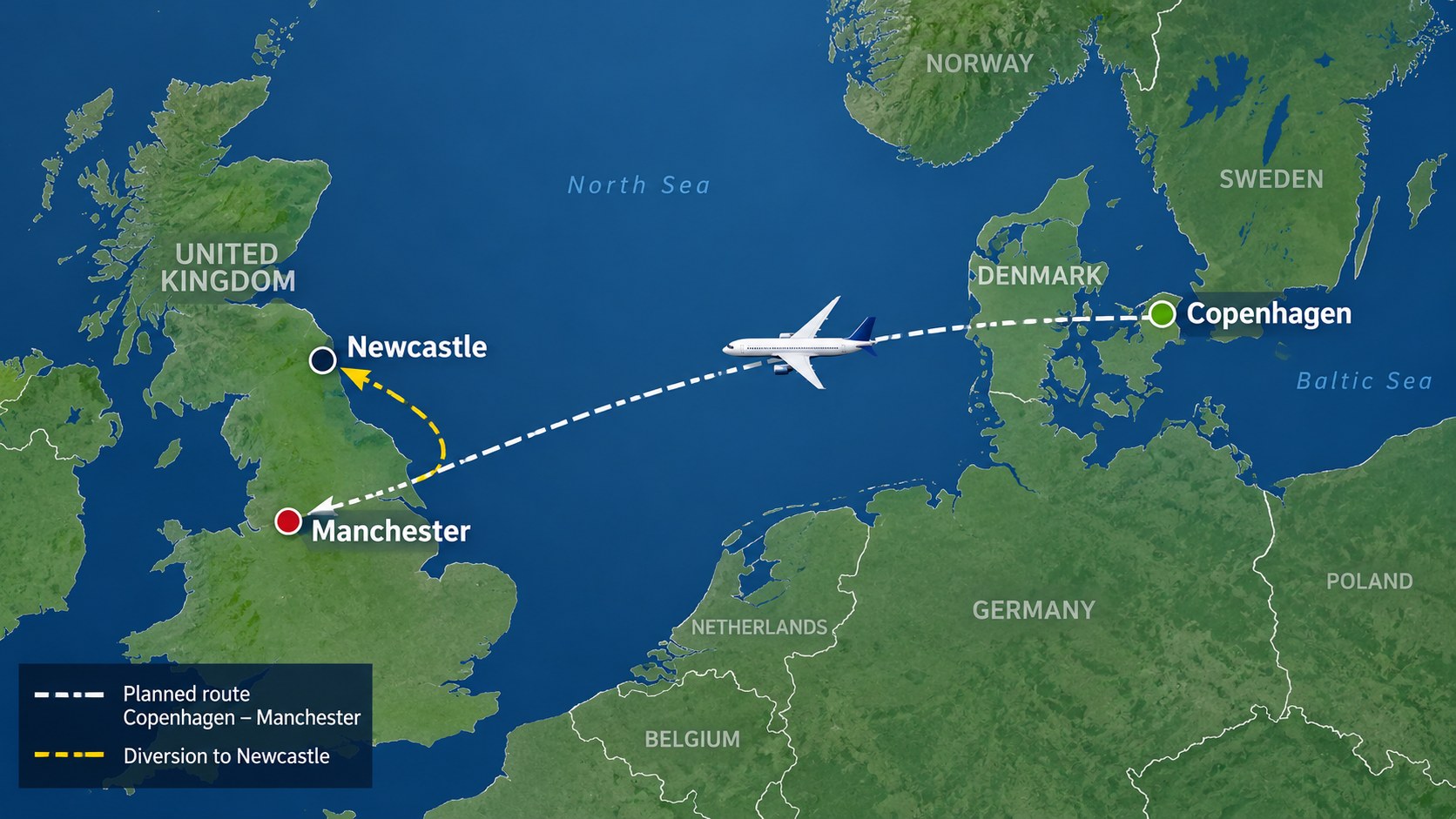
Newcastle offered a suitable diversion point as the flight approached the United Kingdom. The decision shortened the time before the customer could receive ground medical care compared with continuing to Manchester under the circumstances described.
Choosing a diversion airport does not by itself imply that the aircraft was unsafe. It can be a risk-management decision centred on a passenger rather than a mechanical problem.
What squawk 7700 means
Flight-tracking reports may show the transponder code 7700, a general emergency code that alerts air traffic control. It communicates priority and the need for assistance, but it does not identify the specific cause.
A 7700 code can accompany medical, technical or other emergencies. Viewers should not infer fire, loss of control or a particular diagnosis from the code alone. The airline statement and airport response provide the necessary context.
Public flight-tracking data are useful for timing and route awareness, but they are not a complete incident investigation. Headlines should distinguish observed track data from facts confirmed by the operator or authorities.
How medical diversions are handled
Cabin crew can request assistance from medically trained passengers and may consult ground-based medical support according to airline procedures. The captain retains responsibility for the aircraft and decides whether to divert, informed by the available information.
Air traffic control can provide priority handling and coordinate with the destination airport. Airport medical or ambulance teams may meet the aircraft after landing. Other passengers generally remain subject to crew instructions while the situation is stabilised.
The exact sequence varies. It would be wrong to claim that every illness produces a diversion or that one universal threshold applies. The seriousness of symptoms, time to destination and available airports all matter.
What happened to the journey afterwards
Contemporary reports focused on the safe diversion and reason supplied by easyJet. Readers seeking the later itinerary of a particular booking should use the airline’s direct communication, because operational plans can change after landing.
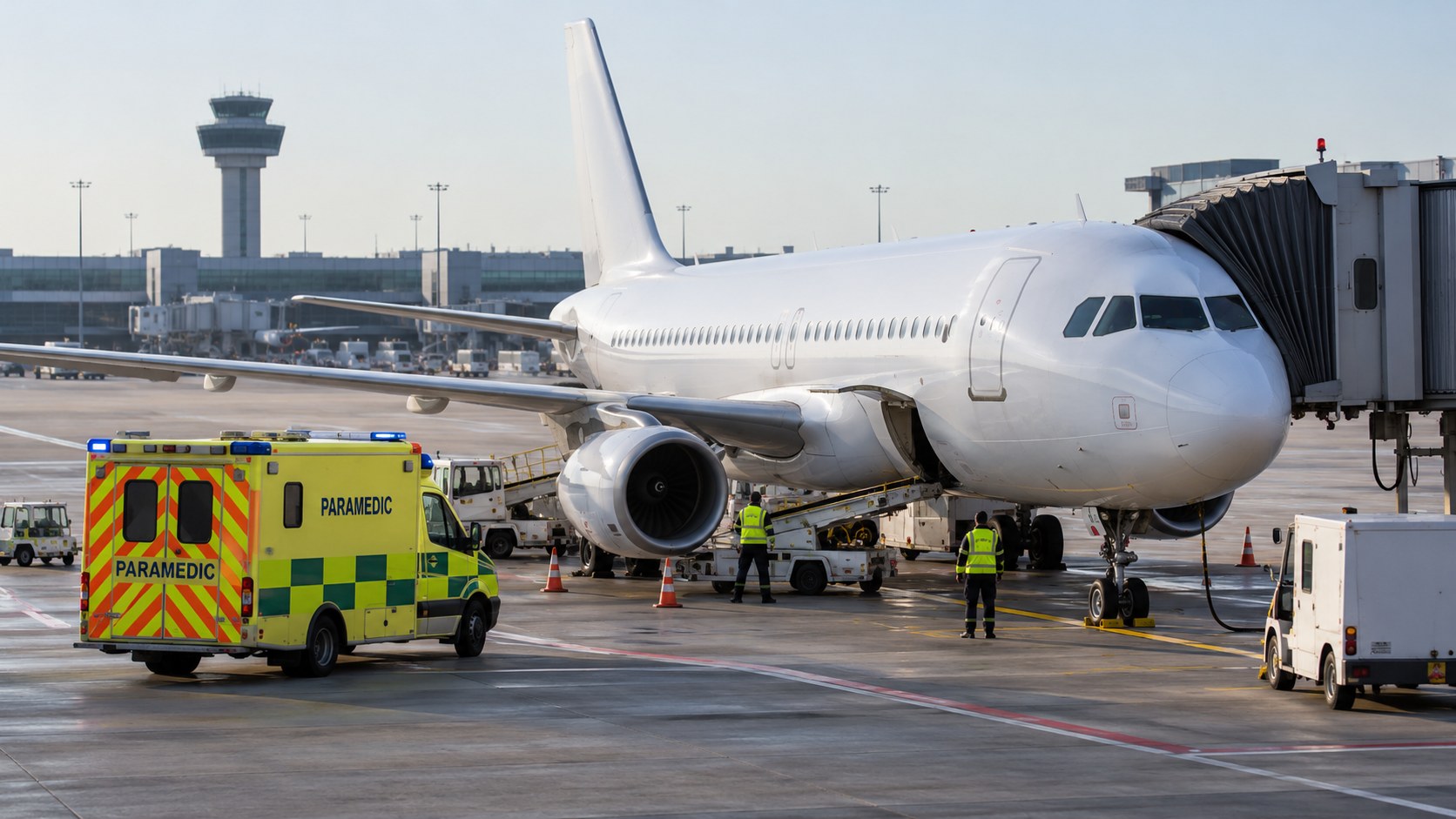
A diversion can create delays while medical assistance is provided, the aircraft is assessed and crew duty limits are considered. That does not mean every passenger automatically receives the same remedy.
Compensation rights depend on the circumstances and applicable rules. A medical emergency involving a passenger may be treated differently from a disruption within an airline’s control. Travellers should keep booking records and ask the carrier for the stated reason.
Passenger rights and practical steps
If your flight diverts, follow crew instructions and monitor the airline’s app, messages and airport displays. Keep receipts for reasonable necessary expenses and retain boarding documents.
Ask the airline what onward transport or accommodation is being provided. Do not rely solely on social-media claims from travellers on different bookings; routes and assistance arrangements can vary.
For a disputed claim, request the airline’s written explanation. UK Civil Aviation Authority guidance explains routes for resolving delay and cancellation issues, but eligibility depends on the facts.
Avoiding misinformation after an incident
Check the flight number, route, date and operator. A missing digit can connect the search to a different service. In this case, U22238 is the number appearing in the reported incident.
Separate confirmed facts from inference. A turn on a tracking map shows a change of course, not the medical diagnosis or decision-making conversation in the cockpit.
Be wary of dramatic images. Generic aircraft pictures and AI illustrations are not photographs of the incident unless clearly identified. The images in this article are illustrations.
Why careful wording matters
Aviation events attract rapid attention, and small wording choices can change the impression. “Diverted after a medical emergency” describes the reported operational decision. “Aircraft emergency” may suggest a technical problem that the available evidence does not establish. “Crash landing” would be plainly unsupported here.
The same discipline applies to timing. Articles published immediately after an event may contain provisional details. Later statements can correct the route, flight number or reason. Record the publication date and prefer direct confirmation from the operator or relevant authority. If facts remain unavailable, say so rather than filling the gap with a dramatic explanation.
Frequently asked questions
Was the flight U2238 or U22238?
Reliable reports identify the flight as U22238. U2238 appears to be a shortened or mistyped version in the search phrase.
Why did it land in Newcastle?
easyJet said a customer required urgent medical attention. Newcastle was used as the diversion airport.
Was there an aircraft fault?
No reliable report reviewed here identified a technical fault. The airline’s stated reason was a medical issue involving a customer.
Did the aircraft land safely?
Yes. Contemporary reporting described a safe landing at Newcastle.
The evidence supports a straightforward account: easyJet U22238 diverted safely to Newcastle on 27 October 2025 because a customer needed urgent medical attention. Claims of a crash or technical emergency are not supported by the sources reviewed.
Authoritative reference: chroniclelive.co.uk.
Authoritative reference: caa.co.uk.
Authoritative reference: nhs.uk.
Continue with this relevant DailyInsights resource: Business.
Continue with this relevant DailyInsights resource: General News.
