


Pappedeckel is a search spelling best understood by checking the established German words Pappdeckel and Pappendeckel. Duden lists those two forms for a piece of cardboard. The exact spelling Pappedeckel should not automatically be presented as the standard dictionary form, a separate modern invention or a specialist material brand.
For an English-speaking reader, “piece of cardboard” or “cardboard board” will often be the useful starting point, with the surrounding sentence deciding the final translation. This guide distinguishes the verified dictionary entries from broader claims about dialect, sustainability and practical uses. Dictionary information was checked on 20 October 2026.
Image note: The featured and supporting images are AI-generated editorial illustrations, not documentary photographs or actual software screenshots.
| Form | How to treat it |
|---|---|
| Pappedeckel | Exact search spelling; check context |
| Pappdeckel | Verified Duden dictionary form |
| Pappendeckel | Verified Duden dictionary form |
| Pappe | Related material word with separate senses |
Which spelling should you use?
Duden’s entry for Pappdeckel identifies a masculine noun referring to a piece of cardboard. Its separate entry for Pappendeckel gives the same basic material meaning and links to the shorter form. These are the strongest reference points for formal writing.
Pappedeckel, by contrast, is the exact term a reader may have searched for. The difference is small visually, which makes it easy to reproduce without checking. In a translation, product description or language assignment, use the established form that fits the source rather than assuming that every online spelling is equally standard.
This does not prove that nobody uses Pappedeckel informally or regionally. It means that a claim about a particular dialect, location or historical period needs its own evidence. A general dictionary entry for a neighbouring spelling cannot establish a detailed regional history for the exact search term.
What does the word mean in English?
The safest basic translation is a piece of cardboard. Depending on the object and sentence, a translator might choose board, cardboard sheet or a more specific description. The important point is to identify what the speaker is referring to before choosing an English noun.
Suppose an instruction tells someone to place a photograph on a stiff backing. “Cardboard backing” may communicate the intended object more clearly than a literal compound translation. If the sentence concerns the cover of a handmade item, “cover board” may be suitable. These are illustrative translation choices, not claims that the German noun always has each of those specialised meanings.
Avoid automatically translating every occurrence as “cardboard lid”. Although the component Deckel can suggest a lid or cover, a compound’s dictionary meaning must be checked as a whole. Translating its pieces separately can produce an English object that the original sentence never described.
How Pappe helps explain the material
Duden’s entry for Pappe describes stiff paper-based material and records separate colloquial uses. This helps explain the material family behind Pappdeckel and Pappendeckel, while also showing why a word can have different senses in different settings.
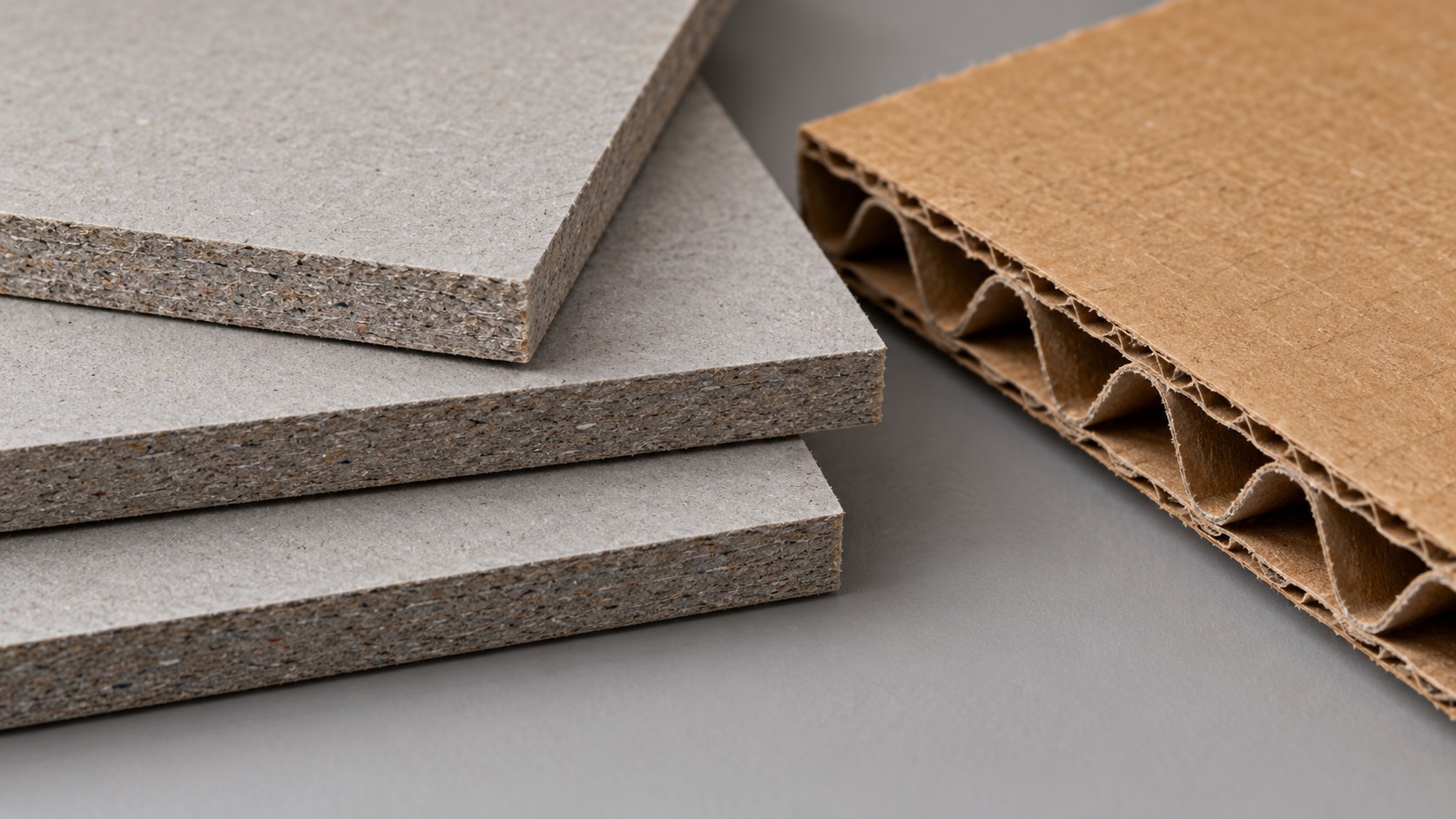
A useful distinction is between naming a material and specifying a product. The word cardboard does not tell a buyer everything about thickness, finish, structure or suitability. A school craft board, a packaging panel and a specialist backing can all require different specifications, even when everyday language places them within a broad paperboard category.
For that reason, a translation alone is not a purchasing specification. If the context is an order or a technical task, check dimensions, thickness and intended use separately. Do not infer a particular grade or manufacturing process from the word itself.
Is Pappedeckel a brand or a new product?
The dictionary evidence discussed here supports a language explanation through related established forms. It does not identify Pappedeckel as a particular company, patented product or new packaging technology. A webpage using the term as a headline is not enough to establish any of those identities.
If you encounter it on a product listing, inspect the seller’s description. Does it name a manufacturer, give a product code and explain what is being supplied? If it appears in an ordinary sentence, a language interpretation is more likely to be useful than a business profile. Context should determine the research path.
This is also why broad promotional claims deserve care. A familiar material word does not become an innovation simply because it appears in an article about modern design. A genuine product claim should be traceable to the specific product and its documented properties.
Grammar and practical example sentences
The dictionary forms are masculine: der Pappdeckel and der Pappendeckel. Their plural forms retain the noun spelling with the plural article die. For a learner, recording the article alongside the noun is more useful than memorising an isolated English translation.
A simple illustrative sentence is “Das Bild liegt auf einem Pappdeckel”, meaning that the picture is resting on a piece of cardboard. Another is “Ich brauche einen Pappendeckel”, meaning “I need a piece of cardboard.” These examples are written for this guide; they are not historical quotations or evidence of a particular dialect.
When translating a longer passage, first identify whether the word is the subject, object or part of a prepositional phrase. Then resolve the object being described. Grammar and physical context work together: getting the noun’s material meaning right does not automatically produce a natural English sentence.
What about slang and regional claims?
A related word can acquire a colloquial sense without every spelling sharing that sense in every region. Duden, for example, records a colloquial driving-licence meaning under Pappe. That is a reason to inspect context carefully, not a licence to assign the same meaning to every similar-looking form.
If a sentence concerns a traffic stop, an identification document or a joke, a purely material translation may be awkward. The appropriate next step is to check a source for the actual expression used. Do not substitute an entertaining slang explanation merely because it makes a more memorable article.
Likewise, a spelling that resembles spoken pronunciation may be a transcription, a regional form or a simple error. Determining which requires evidence from the relevant speaker, text or dialect source. Without that evidence, the honest description is that the standard dictionary forms have been verified and the exact variant remains context-dependent.
Using the term in craft or packaging descriptions
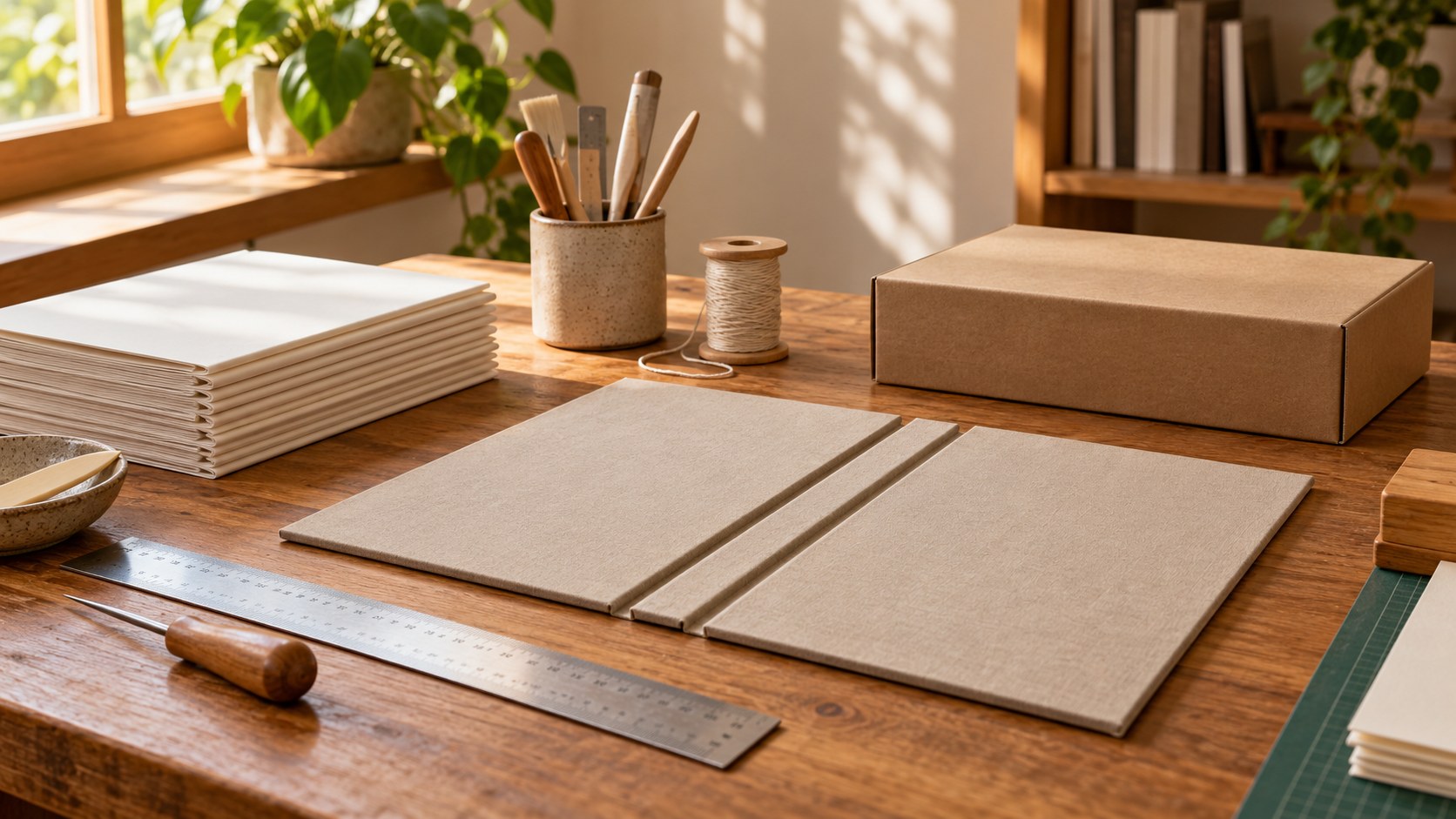
For a craft tutorial, describe the physical requirement in plain language. Tell the reader whether the backing should be rigid, how large it needs to be and whether the finish matters. The German term alone will not answer those practical questions for a beginner.
For a shop listing, pair the material name with measurable information. A photograph can help show the surface and edge, but it cannot reliably establish thickness or performance. Buyers should be able to compare the written specification with the intended task without guessing from a familiar-looking brown or grey sheet.
Environmental statements also need a separate basis. The word does not prove recycled content, recyclability, certification or suitability for a particular collection system. If those properties matter, look for evidence about the actual item. Language meaning and environmental performance are different questions.
A quick method for checking an unfamiliar spelling
Copy the whole sentence rather than the single word. Look up the exact form, then compare any suggested standard entries. Check whether the source is a dictionary, a seller, a personal comment or an article repeating another page. Each can answer different questions, but they should not be treated as interchangeable evidence.
Next, decide what you need: a formal German spelling, an English translation or a material specification. Choose the answer that serves that purpose. For formal usage, Pappdeckel and Pappendeckel are the verified dictionary forms. For translation, use the surrounding object and action to select natural English wording.
Is Pappedeckel the same as Pappdeckel?
It is a closely related search spelling, but the verified Duden entries are Pappdeckel and Pappendeckel. Use those references when a standard spelling is required.
Does it always mean a lid?
No. The dictionary meaning of the established forms is a piece of cardboard. A lid or cover translation needs support from the sentence and the object being described.
Pappedeckel is therefore most useful as a starting point for a spelling and context check. Establish the intended German form first, then translate the actual object rather than building an elaborate meaning from an unverified variant.
Browse our General News explainers.
Explore our Business section.

1 Comment
Pingback: Inbredward: Meaning, Search Intent and Verification